News

Whisky or whiskey

Whisky or Whiskey?

To "e" or not to "e" is the question? But does it make a difference?The flavour of the WHISKY is the same with a "u" as the flavor of Whiskey without a "u"! It doesn't really matter. But why is then, a Scotch "WHISKY" and a Bourbon "Whiskey" ? Lets find out more....Because it can be a great conversation starter!  The "Generalisation" The origin of the word WHISKY (or Whiskey) lies in the Gaelic (an ancient Celtic language) word "Uisce beatha", meaning Water of Life. In fact the spelling controversy could have even started right here..since the Scottish version of Gaelic spells it as "Uisge beatha"  with a g instead of a c!  Fast forward to more recent times and you may have heard that the spelling may be different depending on the location of the Whisky producer e.g. WHISKY without 'e' : Scotland, Canada, Japan, Australia, Taiwan, India etc. Whiskey with an 'e' : United States and Ireland.But is that true? and also why do they spell it differently in the first place? A Bit of History Lets start by examining some old labels (below) in Ireland! And lo and behold...it seems that they originally also spelt it as WHISKY (without an "e"), the same as Scotland. So how did we end up with all this confusion about Irish distilleries adding an "e" to their Whiskey. The story starts around the 1830s when an Irish Excise Tax Inspector (of all the people!) - Aeneas Coffey, invented the "Column Still" (also known as the "Coffey Still" see images below) with the purpose of enhancing the efficiency and lowering the cost of distillation (effectively by implementing a continuous distillation of the spirit that resulted in lighter/perhaps less flavourful spirit albeit at a higher ABV). However, the Irish distillers dismissed it, as they believed it was inferior to their "original" Pot Distilled WHISKY. Pictures source: scotchwhisky.com After being rejected by his countrymen, guess where Mr. Coffey took his invention....yes, you guessed it right! Scotland - where his innovation was welcomed with open arms by the "thrifty" Scots. The Column Still (largely used for production of grain whisky) was instrumental in bringing down the overall cost of the Whisky immensely and ultimately the growth and dominance of Scotch WHISKY (which eventually was led by "blended" Scotch WHISKYgiven the availablity of cost efficient grain whisky). However, the traditional Irish distillers sought to differentiate themselves from this "inferior" WHISKY and decided to introduce the "e" into the Whiskey to denote the superior Irish Whiskey made from traditional Pot Stills. Thus, began the use of the word "WhiskEy" in Ireland.  As with most controversial topics, if you ask some of the Irish distilleries/historians - the story behind the "e" may be somewhat different! But we will not get into that controversy. So in the US and Ireland is the "E" required by Law? The E in the Whiskey travelled to the US along with mass migration from Ireland to the US (very similarly to the larger Scot populace that went to Canada than did the Irish, and who did not carry the E with them). Surprisingly though in 1968 the US Bureau of Alcohol, Tobacco and Firearms actually specified the spelling of the indigenously produced spirit should be – Whisky (what? no E here!). This was later relaxed and left as a choice of the producer. Various brands such as Maker’s Mark continue to spell without the E perhaps as homage to their Scottish ancestry (see label above). What about Ireland then?  The EU technical file specifies that all Irish whiskeys must bear the sales denomination “Irish Whiskey” or “Uisce Beatha Eireannach” or “Irish Whisky”. The Conclusion Good to know and to keep in the back of our mind, but lets pay more attention to the liquid in the glass - regardless of where it is from - Scotland, Japan, Ireland, America or Canada! Its the flavour that matters (or is it the flavor?) #Kanpai #Slàinte Mhath
六種方法去享受燒酎 | Six Ways to Enjoy Shochu

六種方法去享受燒酎 | Six Ways to Enjoy Shochu

日本燒酎可以通過多種方式飲用。但當提及到這種烈酒,很少人對它有深入嘅了解。接下來睇睇你對酒既認識有幾多。 Japanese Shochu can be enjoyed in multiple ways! Read further of how you can step up your drinking game…when it comes to this hidden spirit from Japan. 1. 純飲 (Neat/ Straight) (Credit: Kuromaru) 品嚐純正的燒酎,欣賞每一口的精緻細節。放在各種杯都可以呀!你都可以將瓶子放在冰箱裡冷藏後享用。 To savour Shochu in its pure self, admire all the delicate details in every sip. All kinds of glassware would do the work! Or you can put the bottle in the fridge and enjoy it chilled.   2. 大冰塊 (On The Rocks) (Credit: Kuromaru) 起初,燒酎的全部味道會衝擊你的味蕾。然後,隨著冰的融化,水的稀釋會降低酒精味道的強度。由於酒精濃度被降低,你舌頭的味覺會比較靈敏,較易接觸酒精。感受稀釋後,在較低(冷)的溫度下,您可能會在同一杯燒酎中發現/享受不同的香氣。 At first, the full impact of the Shochu will hit your palate. Then, as the ice melts, the dilution from the ice can reduce the intensity of the alcohol’s taste. And the alcohol will be less likely to overpower your palate. After the dilution and at a lower temperature, you may find/enjoy different aroma and flavours in the same Shochu.   3. 熱水 (Oyuwari) (Credit: whizzky.net) 這種做法在日本非常普遍。最好搭配 Imo (番薯) 燒酎,因為 Imo 燒酎 有很多香氣和甜味。如何享用一杯 Oyuwari?首先在您的玻璃杯中倒入 4 份熱水(約 60°C)。然後,加入6份燒酎。這樣,您就可以享受一杯明亮的香氣和溫和的飲品! This practice is very common in Japan. It is best with Imo (Sweet Potato) Shochu, since Imo Shochu has lots of aroma and sweetness. To enjoy a Oyuwari, firstly, pour 4 parts of hot water (around 60°C) in your glass. Then, add 6 parts of Shochu. Here you get a bright aroma and yet mild go-to drink!   4. 冰水/水割 (Mizuwari) (Credit: The Gate) Mizuwari 是飲用燒酎的 OG 方法,這種傳統現在也用於飲用威士忌。享用一杯水割,請將您喜歡的燒酎倒入岩杯(Rock Glass)中。然後,裝滿冰塊,以 6 份燒酒對 4 份水的比例將水倒到杯裏,攪拌一下就完成了!當然,你都可以因個人喜好隨意調節份量! Mizuwari is another traditional/original method to consume Shochu and this tradition has been used for Whisky too. To enjoy a Mizuwari, pour your choice of Shochu in a rock glass. Then, fill it with ice, and pour water to the brim in a proportion of 6 parts Shochu to 4 parts water, stir it and you're done! Please feel free to adjust the proportion to match your preference.   5. Chu-Hi (Credit: Hamada Syuzou Co Ltd.) Chu-Hi 的名稱是 ShoCHU-HIghball 的縮寫。準備好你的高球杯並裝滿冰塊。倒入您選擇的燒酎(最好用大麥燒酎或者一啲新推出,果香味較重的燒酎),然後加入蘇打水!最後,你可以放一片檸檬皮在杯上 😊 The name of Chu-Hi is the abbreviation of a ShoCHU-HIghball. Get your highball glass ready and fill it with ice. Pour your choice of shochu (preferably with Barley Shochu or some of the new Shochu releases which are very fruity) and top it up with soda or sparkling water! Drop a lemon peel if you are feeling fancy 😊   6.酸酒/雞尾酒 (Sour/ Cocktail) (Credit: Kuromaru) 您可能以前聽說過威士忌酸酒(Whisky Sour),但燒酎酸酒(Shochu Sour) 在日本同樣受歡迎!調酒師將燒酎與酸和糖漿結合,打造一杯所有雞尾酒愛好者也喜愛的夏日飲品。 You may have heard of Whisky Sour before, but Shochu Sour is just as popular in Japan! Bartenders combine Shochu with citrus and syrup, creating a refreshing summer drinks for all cocktail lovers.
Mankoi “まんこい” 木桶陳釀單一蒸餾的黑糖本格燒酎 Cask Matured Single Distilled Honkaku Kokuto (Brown Sugar) Shochu

Mankoi “まんこい” 木桶陳釀單一蒸餾的黑糖本格燒酎 Cask Matured Single Distilled Honkaku Kokuto (Brown Sugar) Shochu

只屬於日本奄美大島的黑糖燒酎,豐有悠長的歷史和特色。認識一下奄美大島上歷史最久遠的日本黑糖燒酎酒廠 – 彌生燒酎釀造所。和了解他們的旗艦產品 – Mankoi。 From the Amami Islands of Japan - Kokuto (Brown Sugar) Shochu with a long history and unique characteristic.  Introduction of the oldest distillery in Amami Island - Yayoi Shuzo and their flagships bottlings - Mankoi. 
WA Japanese Premium Craft Gin

WA Japanese Premium Craft Gin

This Wa Gin is a craft gin, which uses 10 Years aged Sake as the base with 7 botanicals, 這款 和 氈酒是使用已經存放10年的清酒作為基酒,與7種植物蒸餾而成。
Juo Mugi (Barley) Shochu 十王 日本大麥燒酎

Juo Mugi (Barley) Shochu 十王 日本大麥燒酎

JUO (Barley i.e. Mugi) Shochu, the flagship bottling from Miroku Shuzo (a family owned craft distillery located in Oita Prefecture, Japan) . 十王,是一款來自日本大分縣,家族式營運的みろく酒造的主打燒酎.
Daiyame (だいやめ)單一蒸餾的番薯本格燒酎 Single Distilled Honkaku Imo Shochu 

Daiyame (だいやめ)單一蒸餾的番薯本格燒酎 Single Distilled Honkaku Imo Shochu 

一款含有豐富新鮮荔枝香氣的日本燒酎 A very aromatic shochu...literally bursting with the fragrance of fresh lychee 
侍士之門 限量版 日本番薯燒酎 Samurai No Mon Limited Edition Sweet Potato (Imo) Shochu

侍士之門 限量版 日本番薯燒酎 Samurai No Mon Limited Edition Sweet Potato (Imo) Shochu

它的原料是選用優質的「源氏」甜薯和「白玉米」米麴,以及黑米  High quality ingredients  “Genji-imo” and the rice for the Koji, “Shiratama-mai” 
它還是日本威士忌嗎?

它還是日本威士忌嗎?

自2021年2月16日起,日本烈酒酒造協會公布 "日本威士忌" 新的標示法規,為日本威士忌給予確實的定義,其目的是提高透明度,釐清甚麼是"日本威士忌"。
To Be or not To Be "Japanese Whisky"

To Be or not To Be "Japanese Whisky"

A little bit of History - The Connectivity with Scotland: Commercial production of Japanese Whisky has had a very long history in itself though its roots have also been closely tied to Scotland in many ways  - including Masataka Taketsuru (widely regarded as the father of Japanese Whisky) having learnt the basics of whisky making in Scotland. One of the important aspects of whisky making is blending, which is based on the marriage of different whiskies from different distilleries enabling a wider variety of bottlings with broader flavors thereby appealing to a wider audience. Blending skills have been a vital part of the whisky industry in Japan as well, with its poster child bottling such as Hibiki meeting the demand for well balanced, rounded whiskies from Japan. While some of the blends were supported by production at home, some were/are based of/included imported bulk spirits which might have been matured further in Japan. This was, to some extent, a natural process, given the access that some of the larger Japanese distilleries/companies had by the virtue of ownership of various distilleries in Scotland.   Regulations in Japan - The Past & Implications: Historically the whisky industry in Japan has been largely governed from the perspective of Liquor Tax without much regulation around labeling requirements as to what can be labeled as Japanese Whisky and what cannot. As we mentioned earlier, bulk spirit imports have continued for a fairly long time; sometimes for further maturation in Japan and then used within some of the blends. In general, this has been considered normal practice and frankly been a non-issue for quite some time. However, in the recent past (say over the past 5 - 7 years), "Japanese Whisky" has come under the spotlight while gaining significant reputation by winning multiple awards globally. The growth of the overall whisky Industry along with the prominence of Japanese whisky meant that several new "so called" Japanese Whisky brands also surfaced without much clarity on the actual source/origin of the underlying spirit to take advantage of this new found prominence.  While we do believe that the intent of some of the larger brands was not to mislead deliberately but rather the level of clarity had never been required/anticipated and had never been in the spotlight/focus, some brands were probably established with the sole purpose to take advantage of this increasing popularity of Japanese Whisky.  Regardless of the above, as the demand for Japanese Whisky exploded alongside the overall growth of the global whisky industry itself, there has been greater scrutiny and calls for enhanced transparency starting with the newer brands but also broadly for all producers to bring about more clarity - to better understand what exactly is/was "Japanese Whisky".  The Dawn of a New Era in Japanese Whisky - New Labeling Standards: All this has changed since February 16, 2021 with the release of the New Labeling Standards for "Japanese Whisky" by the Japan Spirits & Liqueurs Makers Association themselves with the purpose of clarifying what constitutes "Japanese Whisky". Some of the key aspects of this standard are listed below: Ingredients: Should include malted grains (may include other cereal grains as well) with water extracted in Japan Production: Saccharification, fermentation, and distillation must be carried out at a distillery in Japan. Alcohol content at the time of distillation must be less than 95% Aging: The distilled product must be poured into wooden casks not exceeding a capacity of 700 liters and matured in Japan for a period of at least 3 years thereafter Bottling: Bottling must take place only in Japan, with alcoholic strength of at least 40% as of such time Other: Plain caramel coloring can be used. This is similar to rules for Scotch wherein E150A is permitted.  In addition, the standards also attempt to prevent the use of any material which may try to suggest that the Whisky is Japanese simply "by implication". To be clear, the above are "standards" which shall be adopted by the producers who are members of above association and are not legally binding. So while we may continue to see some vague labeling in the market from non-members, we do expect to see clear labeling/information from the member producers which shall help the Japanese Whisky industry. The new standards shall be effective from April 1, 2021, though it gives some leeway until March 2024 to rectify existing labeling. What is Our View and What are We doing at Mizunara? We are big supporters of transparency (including product origin, aging and any other product details etc. from all producers worldwide) and while the standards may not be perfect or may not address all the issues with all the bottlings from Japan we think this is a great step in the right direction. By no means is a "World Blended" whisky any inferior to "Japanese Whisky"  - in fact we think some of the world blended whiskies from Japan are excellent. We are just excited at the prospects of a "20/20" clarity while sipping some "World Blended" and "Japanese Whisky" side by side. Given the announcement, we are also changing the categories of the products based on the information available (either directly from the distilleries or other third party verifiable sources) to establish which products confirm to the new standards and which don't. This may take some time and we appreciate your patience on this. If any of your wish to get further clarification on any products listings, please email us on sales@mizunaratheshop.com or call us on 3705 9770. We would be happy to share any information that we have.  
安田 100%番薯日本燒酎 Yasuda 100% Imo (Sweet Potato) Japanese Shochu

安田 100%番薯日本燒酎 Yasuda 100% Imo (Sweet Potato) Japanese Shochu

選用蔓蕪源氏原隻甜薯和蔓蕪源氏甜薯麴去製作。 Using Sweet Potato ("Imo") as the main ingredient and Imo Koji - from Tsurunashigenji Imo.  
探索日本新興威士忌蒸餾廠 - 安積蒸餾所

探索日本新興威士忌蒸餾廠 - 安積蒸餾所

日本威士忌的盛行使市面上出現了不少鮮為人知的日本威士忌. 正因為不熟悉感會使大家對這些新興的日本威士忌卻步. 現為大家介紹一間新興的日本威士忌蒸餾廠 – 安積蒸餾廠(Asaka Distillery)
Private Cask Single Malt Whisky from Ardmore Distillery, Tamashii - Japanese Spirits or Soul.

Mizunara Releases Ardmore "Tamashii" Private Cask Single Malt Whisky

A single malt single cask whisky bottling of Ardmore by Mizunara with a vibrant nose, intense palate and a lingering finish. Independent Bottler, Mizunara Hong Kong.
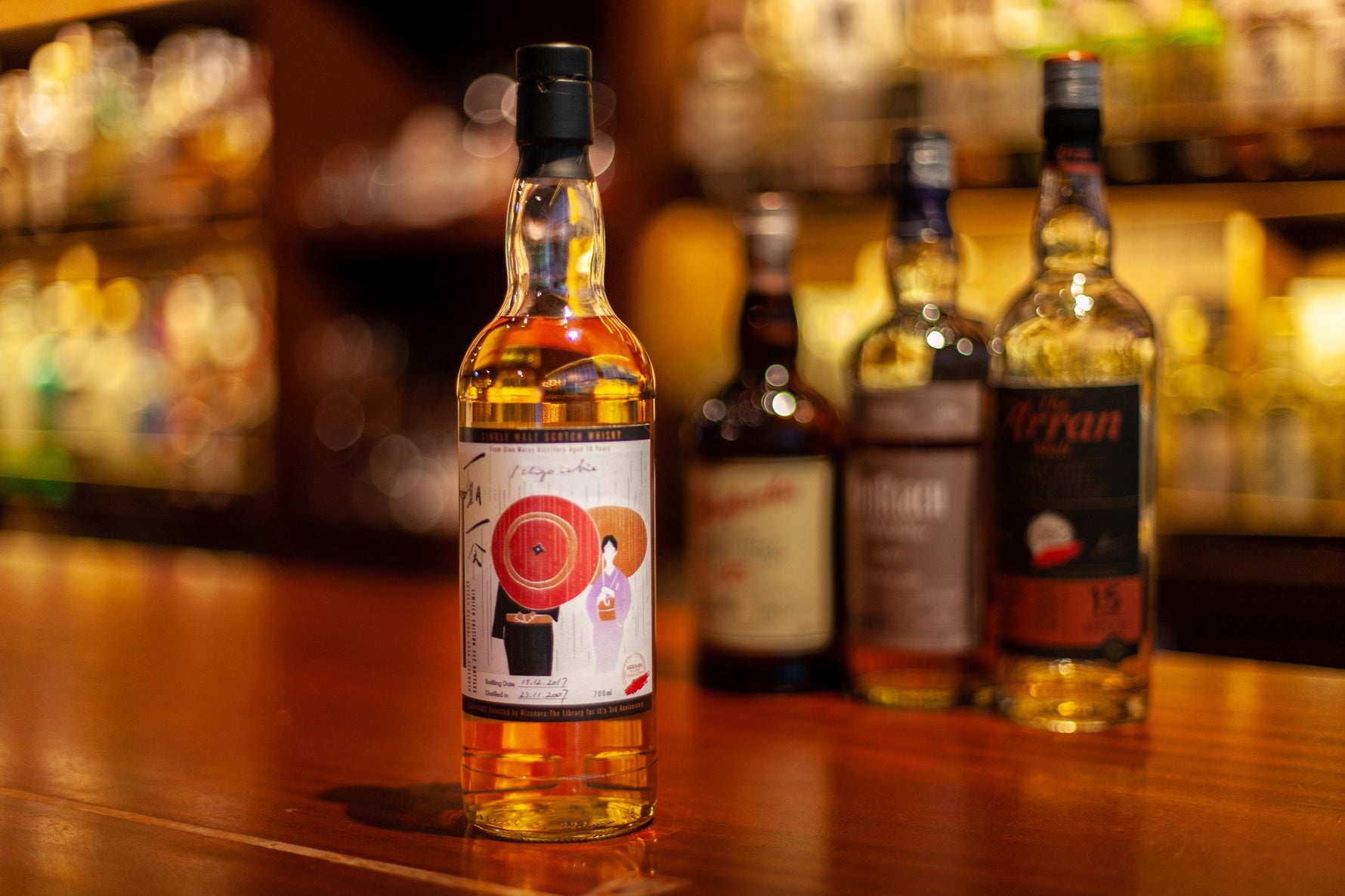
Launching our Private Single Malt Single Cask Whisky: Glen Moray "Ichigo Ichie"

Launching our Private Single Malt Single Cask Whisky: Glen Moray "Ichigo Ichie"

A single malt single cask whisky bottling of Glen Moray by Mizunara with a vibrant nose, intense palate and a lingering finish. Independent Bottler, Mizunara Hong Kong.